
Operational outcomes
- Central visibility across plant, network and customer metrics
- AI-powered anomaly detection
- DMA and NRW analytics
GIS, network, NRW
A GIS-based platform for real-time monitoring of production, distribution networks, non-revenue water and water quality.
Product overview
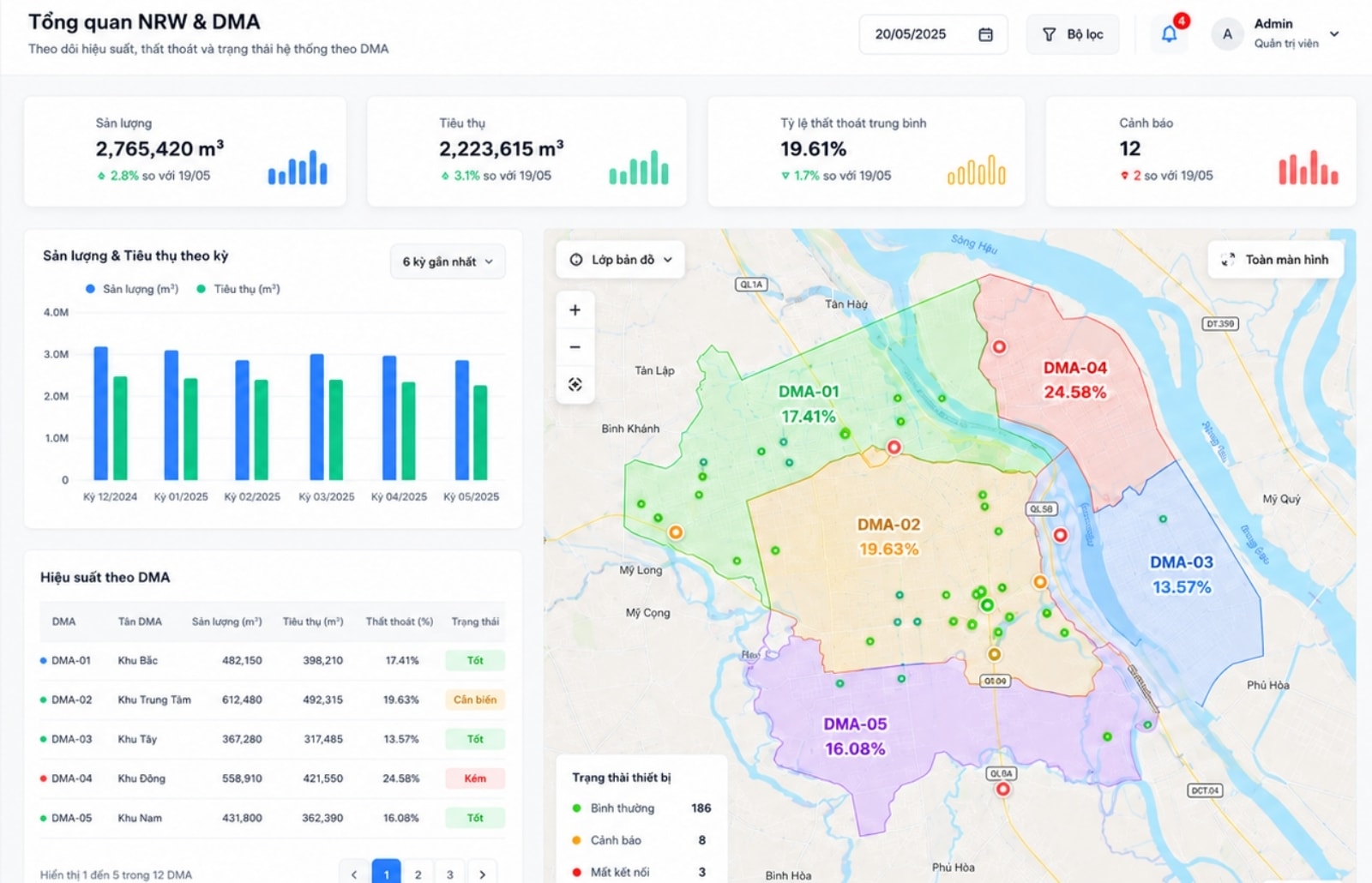
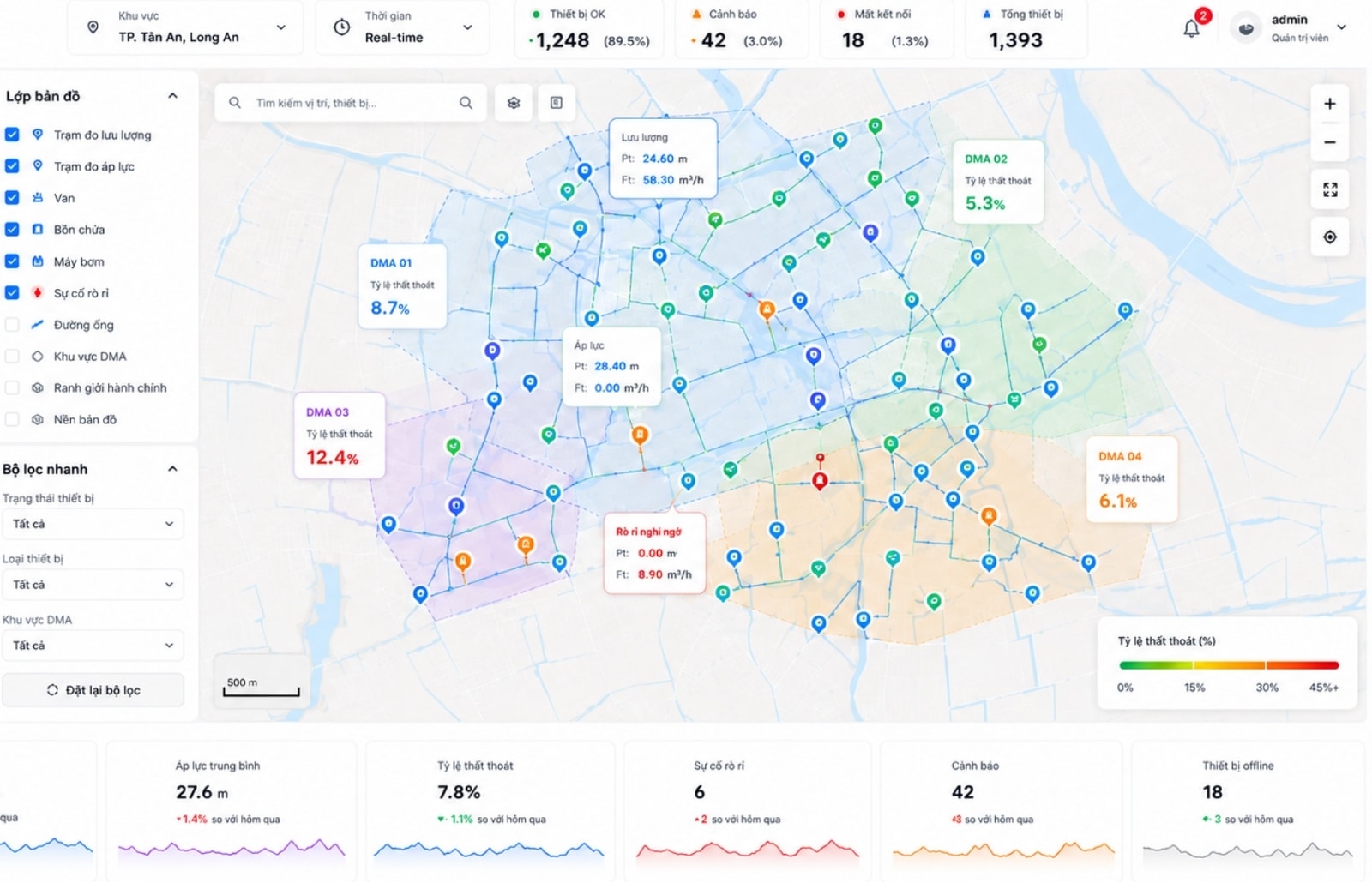
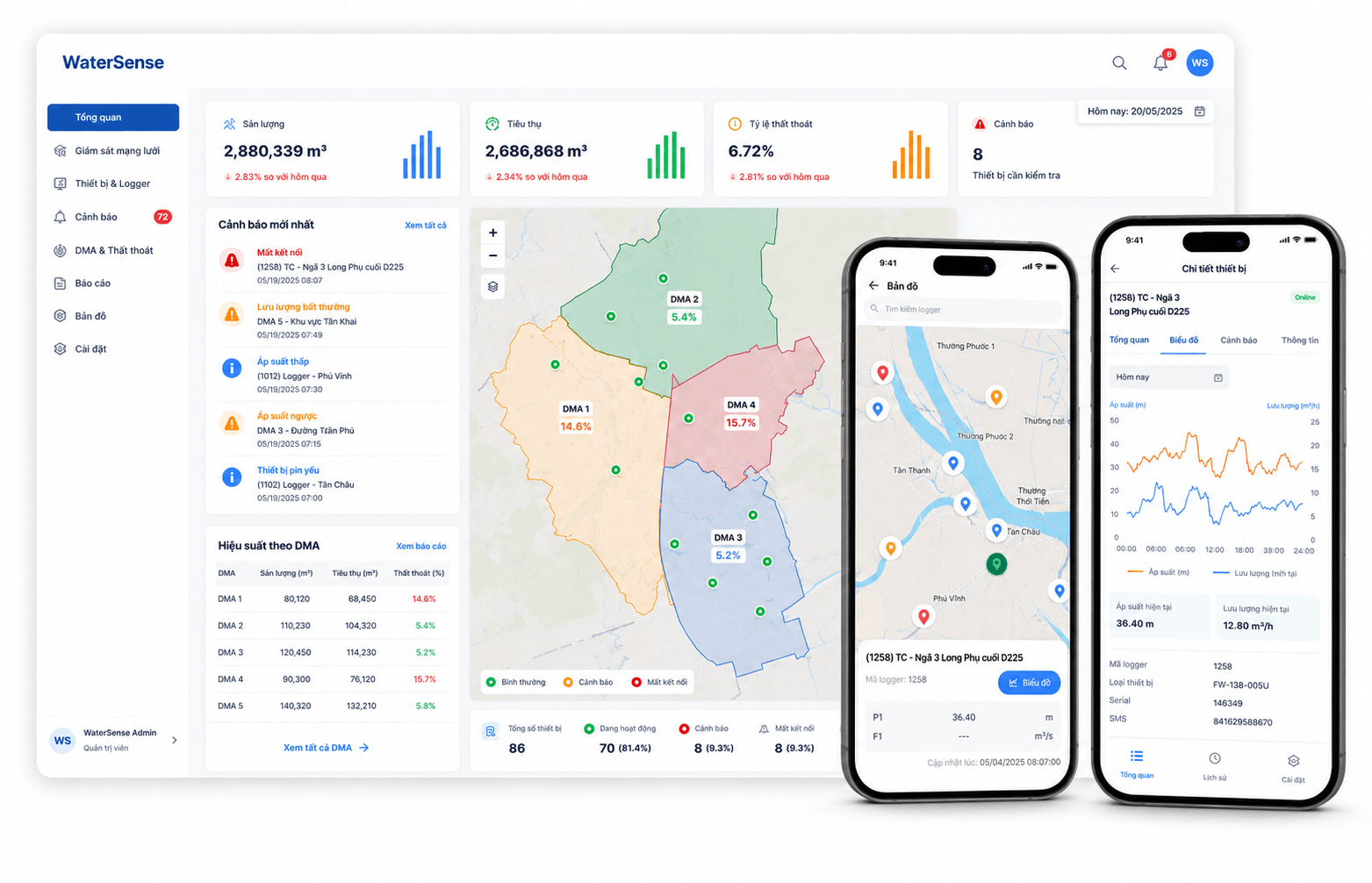
WaterSense brings network maps, DMAs, SCADA/IoT signals, water-quality readings and customer data into one operating screen so teams can detect anomalies, localize losses and coordinate action faster.
WaterSense
Manage pipes, valves, meters, DMAs and network assets on a contextual map.
Track flow, pressure, minimum night flow and loss indicators by zone.
Identify abnormal patterns from real-time data and prioritize areas that need action.
Monitor online readings and alert when configured operating thresholds are exceeded.
Process
Review GIS data, asset IDs and DMA boundaries before operations go live.
Integrate SCADA, loggers, GIS, billing and existing data stores.
Set thresholds, alert rules, dashboards and anomaly-detection models.
Route alerts into inspection, confirmation and result-reporting workflows.
Deployment model
Best for utilities with separate GIS, SCADA, logger or billing systems that need one operating layer for the distribution network.